China's new energy vehicles actively expand into the European market
2023-12-15
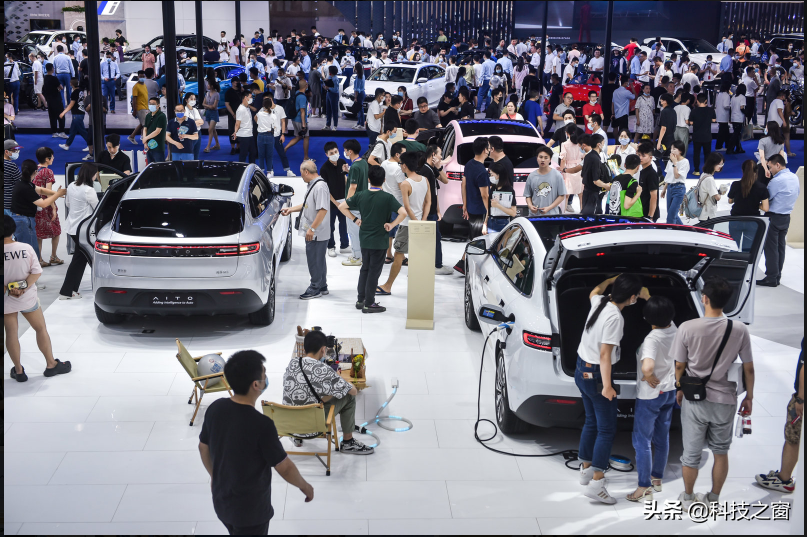
Close cooperation between Chinese and European enterprises in the new energy vehicle and its upstream and downstream industrial chains is conducive to promoting green and sustainable development in the transportation sector, becoming an important force in promoting global carbon neutrality in transportation.
In recent years, with the continuous growth of demand for new energy vehicles in Europe, Chinese independent brand car companies have gone abroad one after another. In the fields of power batteries, methanol fuel, and autonomous driving, research and development cooperation between Chinese and European enterprises is rapidly advancing.
Excellent quality wins recognition from European consumers
Chinese new energy vehicle company NIO recently held a launch event in Berlin, Germany, and began providing services in four markets: Germany, the Netherlands, Denmark, and Sweden. Previously, BYD signed a long-term cooperation agreement with German car rental company Sixter in Berlin to provide new energy vehicle rental services to the European market and jointly promote the electrification transformation of the car rental market. According to Inovev, a consulting firm in the automotive industry, the number of new car registrations by Chinese manufacturers in Europe in the first half of this year was about 75000, and it is expected to reach 150000 by 2023.
Taking the German market as an example, data recently released by the largest automotive association in Europe, the All German Automobile Club, shows that in the first seven months of this year, about 7000 Chinese manufacturers registered German license plates, accounting for 0.5% of the overall German market share. The agency stated that in the German market where local brands have an absolute advantage, SAIC Group's MG sales have caught up with or surpassed some established car companies. At the beginning of this year, the German Federal Motor Vehicle Administration included Chinese manufacturers in its official statistics for the first time.
The recognition of China's new energy vehicles in the current European market is closely related to the green development trend of the industry, environmental protection and energy conservation and emission reduction goals of various countries. The latest data shows that new energy vehicles currently account for 20% of new car sales in Europe. The vast majority of products sold by Chinese car companies in Europe are plug-in hybrid, pure electric and other new energy vehicles, among which SAIC MG ranks among the top 20 in new energy vehicle sales. The export of new energy vehicles from China to markets such as Norway, Belgium, the UK, and Germany has become an important driving force for the growth of Chinese brand car exports.
It is worth mentioning that China's achievements in new energy vehicles are not solely based on price advantages. A stable supply chain, excellent technology, and excellent quality are increasingly winning the trust of European consumers. The New York Times gave an example that a Bavarian dealer in Germany initially had no confidence in Chinese new energy vehicles, but after carefully studying the actual vehicle, they gave high praise. Before the dealer put up an advertisement, this Chinese hybrid vehicle had achieved good sales results.
The All German Automobile Club is one of the most authoritative automotive evaluation institutions in Europe, and the models launched by Chinese car companies in the European market have received an "excellent" evaluation score from the institution. NIO electric vehicles have passed the European Union Euro NCAP collision test and obtained a full five-star certification.
Taking the German market as an example, data recently released by the largest automotive association in Europe, the All German Automobile Club, shows that in the first seven months of this year, about 7000 Chinese manufacturers registered German license plates, accounting for 0.5% of the overall German market share. The agency stated that in the German market where local brands have an absolute advantage, SAIC Group's MG sales have caught up with or surpassed some established car companies. At the beginning of this year, the German Federal Motor Vehicle Administration included Chinese manufacturers in its official statistics for the first time.
The recognition of China's new energy vehicles in the current European market is closely related to the green development trend of the industry, environmental protection and energy conservation and emission reduction goals of various countries. The latest data shows that new energy vehicles currently account for 20% of new car sales in Europe. The vast majority of products sold by Chinese car companies in Europe are plug-in hybrid, pure electric and other new energy vehicles, among which SAIC MG ranks among the top 20 in new energy vehicle sales. The export of new energy vehicles from China to markets such as Norway, Belgium, the UK, and Germany has become an important driving force for the growth of Chinese brand car exports.
It is worth mentioning that China's achievements in new energy vehicles are not solely based on price advantages. A stable supply chain, excellent technology, and excellent quality are increasingly winning the trust of European consumers. The New York Times gave an example that a Bavarian dealer in Germany initially had no confidence in Chinese new energy vehicles, but after carefully studying the actual vehicle, they gave high praise. Before the dealer put up an advertisement, this Chinese hybrid vehicle had achieved good sales results.
The All German Automobile Club is one of the most authoritative automotive evaluation institutions in Europe, and the models launched by Chinese car companies in the European market have received an "excellent" evaluation score from the institution. NIO electric vehicles have passed the European Union Euro NCAP collision test and obtained a full five-star certification.
The entire industry chain helps local green transformation
Along with China's new energy vehicles entering the European market, there is also a supporting marketing and after-sales service network. SAIC MG has currently entered 16 European countries, and its brand sales outlets have rapidly expanded from 65 in 2020 to over 400. It is expected to reach 650 by the end of this year.
In September 2021, NIO opened its first European direct store and battery swapping station in Oslo, Norway, and plans to expand its products and services to Germany, the Netherlands, and other places this year. In February this year, Xiaopeng Motors opened its first European direct store in Stockholm, Sweden, and gradually expanded its stores to the Netherlands, Denmark, and Norway in the following six months.
With the continuous expansion of the European new energy vehicle market, the demand for power batteries continues to increase, and some Chinese automotive battery suppliers have begun to invest in setting up factories in Europe. In June this year, Guoxuan High tech launched its production base in Germany. On the basis of acquiring Bosch Group's G ö ttingen factory in Germany, this production base has transformed and upgraded traditional automotive component production to power battery manufacturing. According to the plan, the annual power battery production capacity of the project will reach 18 gigawatt hours. Ningde Times has invested 1.8 billion euros to build a power battery base in Turingen, Germany, and is expected to achieve an annual production capacity of 60 gigawatt hours by 2026. This project will provide batteries for car manufacturers such as BMW, Daimler, and Volkswagen, and also create over 2000 job opportunities.
Toptas, the head of the Gottingen factory at Guoxuan High Tech, had worked at the Bosch factory for more than 30 years. After Guoxuan High Tech acquired the production base, he and more than 300 workers were all retained. Toptas told our reporter that the series of renovations and upgrades by Guoxuan High Tech will promote the transformation of the G ö ttingen factory from traditional mechanical manufacturing to efficient and green.
The German Business Daily reported that Germany is a leading producer of electric vehicle batteries in Europe, with existing and planned facilities having a production capacity of 485 gigawatt hours, of which Chinese battery companies have made significant contributions. Dudenhof, Director of the Automotive Research Center at the University of Duisburg Essen in Germany, believes that strengthening cooperation between German and Chinese companies can create favorable conditions for better addressing the global climate challenges.
In September 2021, NIO opened its first European direct store and battery swapping station in Oslo, Norway, and plans to expand its products and services to Germany, the Netherlands, and other places this year. In February this year, Xiaopeng Motors opened its first European direct store in Stockholm, Sweden, and gradually expanded its stores to the Netherlands, Denmark, and Norway in the following six months.
With the continuous expansion of the European new energy vehicle market, the demand for power batteries continues to increase, and some Chinese automotive battery suppliers have begun to invest in setting up factories in Europe. In June this year, Guoxuan High tech launched its production base in Germany. On the basis of acquiring Bosch Group's G ö ttingen factory in Germany, this production base has transformed and upgraded traditional automotive component production to power battery manufacturing. According to the plan, the annual power battery production capacity of the project will reach 18 gigawatt hours. Ningde Times has invested 1.8 billion euros to build a power battery base in Turingen, Germany, and is expected to achieve an annual production capacity of 60 gigawatt hours by 2026. This project will provide batteries for car manufacturers such as BMW, Daimler, and Volkswagen, and also create over 2000 job opportunities.
Toptas, the head of the Gottingen factory at Guoxuan High Tech, had worked at the Bosch factory for more than 30 years. After Guoxuan High Tech acquired the production base, he and more than 300 workers were all retained. Toptas told our reporter that the series of renovations and upgrades by Guoxuan High Tech will promote the transformation of the G ö ttingen factory from traditional mechanical manufacturing to efficient and green.
The German Business Daily reported that Germany is a leading producer of electric vehicle batteries in Europe, with existing and planned facilities having a production capacity of 485 gigawatt hours, of which Chinese battery companies have made significant contributions. Dudenhof, Director of the Automotive Research Center at the University of Duisburg Essen in Germany, believes that strengthening cooperation between German and Chinese companies can create favorable conditions for better addressing the global climate challenges.
China Europe Enterprise Cooperation Embraces Future Transportation Changes
In addition to pure electric vehicles, methanol vehicles are also seen by Europe as an effective way to accelerate carbon neutrality in the transportation sector. In May this year, at the Stuttgart gas station facilities and car washing equipment exhibition in Germany, a Chinese sedan was parked in a prominent position at the Circle K booth of the chain gas station enterprise. This is a methanol fuel vehicle independently developed by Geely Group. Schul Hogen, Director of Fuel Development for Circle K Europe, introduced that this is the first time methanol fuel vehicles have participated in the Stuttgart Gas Station Facilities and Car Wash Equipment Exhibition.
In Stuttgart, Germany, the testing vehicle of Chinese autonomous driving technology company Momenta is now being tested and driven on local streets every day. The company is based on data-driven "flywheel" technology, which can automatically and low-cost solve the problem of differences in road scenes and driving habits between China and Europe, making autonomous driving algorithms popular in Europe. Sun Huan, General Manager of Momenta Europe, introduced that in the actual vehicle testing of a European project, the Momenta closed-loop automation toolchain automatically performs data filtering, annotation, training, and integration in the background, and automates the iteration of the original algorithm problem. "We only took a week to solve the problem that takes a quarter for the regular process," said Sun Huan.
Dudenhoff believes that cars are being redefined by software and chips as a completely new product. In order to avoid being disconnected from future transportation, joint projects between German and even European companies and China are indispensable, especially in the field of autonomous driving technology. "We are thrilled to see new automotive technologies in China, and cooperation with China is very important," said Dudenhoff.
In Stuttgart, Germany, the testing vehicle of Chinese autonomous driving technology company Momenta is now being tested and driven on local streets every day. The company is based on data-driven "flywheel" technology, which can automatically and low-cost solve the problem of differences in road scenes and driving habits between China and Europe, making autonomous driving algorithms popular in Europe. Sun Huan, General Manager of Momenta Europe, introduced that in the actual vehicle testing of a European project, the Momenta closed-loop automation toolchain automatically performs data filtering, annotation, training, and integration in the background, and automates the iteration of the original algorithm problem. "We only took a week to solve the problem that takes a quarter for the regular process," said Sun Huan.
Dudenhoff believes that cars are being redefined by software and chips as a completely new product. In order to avoid being disconnected from future transportation, joint projects between German and even European companies and China are indispensable, especially in the field of autonomous driving technology. "We are thrilled to see new automotive technologies in China, and cooperation with China is very important," said Dudenhoff.
China leaps to become the world's top exporter of automobiles: surpassing Japan with 5 million vehicles, and new energy has not yet been fully developed
China New Energy Vehicle Industry High-Quality Development Report 2023
Related Article

Lei Jun: Xiaomi's goal for intelligent driving is to enter the first tier of the industry by 2024
Viewpoint | Academician responds to questions about new energy vehicles: The spontaneous combustion rate of electric vehicles will be further reduced